Why the Montréal Jazz Festival Doesn’t Suck: A Review
Photograph by Stanley Collins
This past July, the Montréal International Jazz Festival celebrated its 45th annual festival. The festival – which lasts for 10 days – regularly hosts some 2 million people, and features a lineup of ~3,000 official performers, and 650 shows. (If you’re counting, or unfamiliar with music festivals, that is, indeed, a lot of people and a longtime to have a festival). The festival’s attendance has earned it the Guinness World Record as “the largest Jazz Festival in the world.” Much of the festival is free and open to the public, with shows being dispersed across local music venues and public spaces throughout Montréal.
I attended the festival for the first time this year, spending 4 days (July 2 – July 6) in Montréal, along with some of my close friends. It should also probably be noted that this trip was for my Bachelor Party (it is, undeniably, a very “me” thing to opt for a music festival for my Bachelor Party). I wrote about my time at the festival, the festival’s curation, the sound of Montréal, and some bigger pictures thoughts on the contemporary music festival.
Festival Curation
In a podcast interview, Maurin Auxéméry, Director of Programming for the festival, stated that he and his staff pride themselves on curating a lineup not based on who the biggest names are, but one based on the music that moves them; that the festival can be a place of discovery for festivalgoers. In addition to concerts, the festival also featured workshops and panel discussions led by artists. This type of curation, one that places discovery and an engagement in process, runs counter to what many music festivals have increasingly become: less about music, and more about any number of non-music related things. Thankfully, this wasn’t my experience in Montréal.
There are many festivals that carry the word “Jazz” in their title. Yet, there seems to be a reluctance from these festivals to book acts who identify with the tradition as the headlining performer. This is what made Esperanza Spalding performing as the festival’s headliner interesting, if not unique. Spalding’s the consummate artist and a fearless performer, and her set showed that. She played piano, upright bass, electric bass, danced, and spoke with clarity about her commitments as a person and artist. I especially enjoyed her performance of Touch in Mine (fingers) from her 2019 album 12 Little Spells. I’d been waiting years to see Spalding in concert. She did not disappoint!
Derrick Hodge and Marcus J. Moore in Conversation
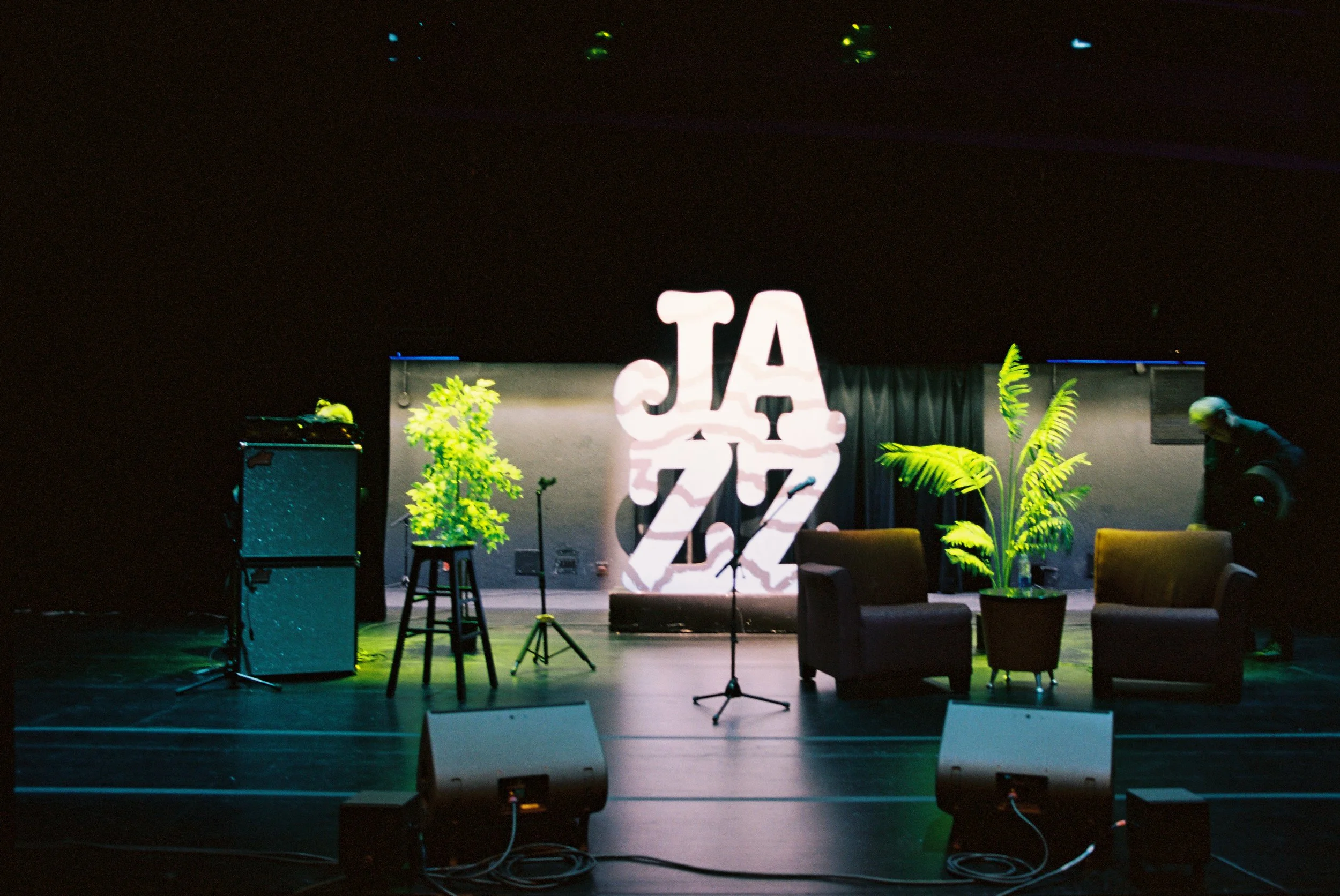
The first event I attended at the festival was a conversation between bassist and composer, Derrick Hodge and Marcus J. Moore, the journalist and author. The conversation was held in a mid-sized auditorium inside the Place des Arts performing arts center.
We arrived a little late, so the conversation was already in progress. To my surprise, and excitement, when we walked in Derrick Hodge was talking about Black Lily – the famed Philadelphia open mic series from the early aughts I recorded a 4-part audio documentary series on. I knew I was in the right place.
The conversation weaved in moments from Hodge’s career: attending Temple University (TU) for music, leaving TU to tour with Jill Scott, returning to TU, growing up in the Philly music scene, his time in The Robert Glasper Experiment, working as a composer, and so on. It was a far-reaching conversation that was given added depth during the Q&A. Audience members asked pointed questions (the first question was about his bass rig setup, signal chain, and pedals – the type of very nerdy, inside Baseball talk I live for), some practical questions (like, how does one get their start as a composer), and more abstract questions (like, how he responded to a moment where he was passed over for a gig).
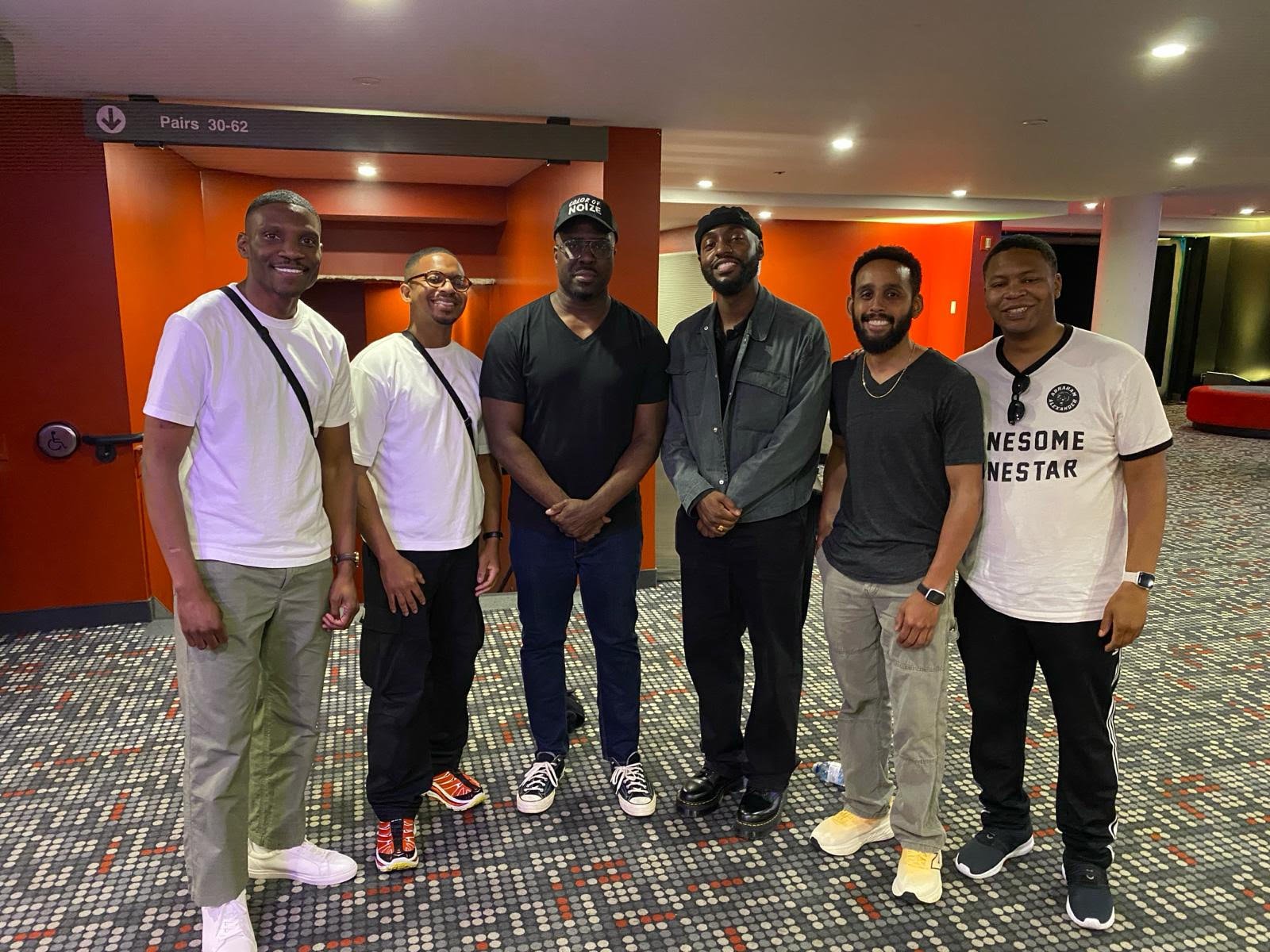
Hodge answered each question with generosity and a surprising level of detail. He went over the allotted time, and still talked to folks in the hallway after it was over. He even took a picture with us! We told him how much his music meant to us and that we’d been listening to him for well over a decade.
Having this discussion as part of the festival – Hodge’s generous responses as a benefit – speaks to the intentionality in how the festival is curated, offering insight into the performer, their process, enriches the music.
The Sound of Montréal
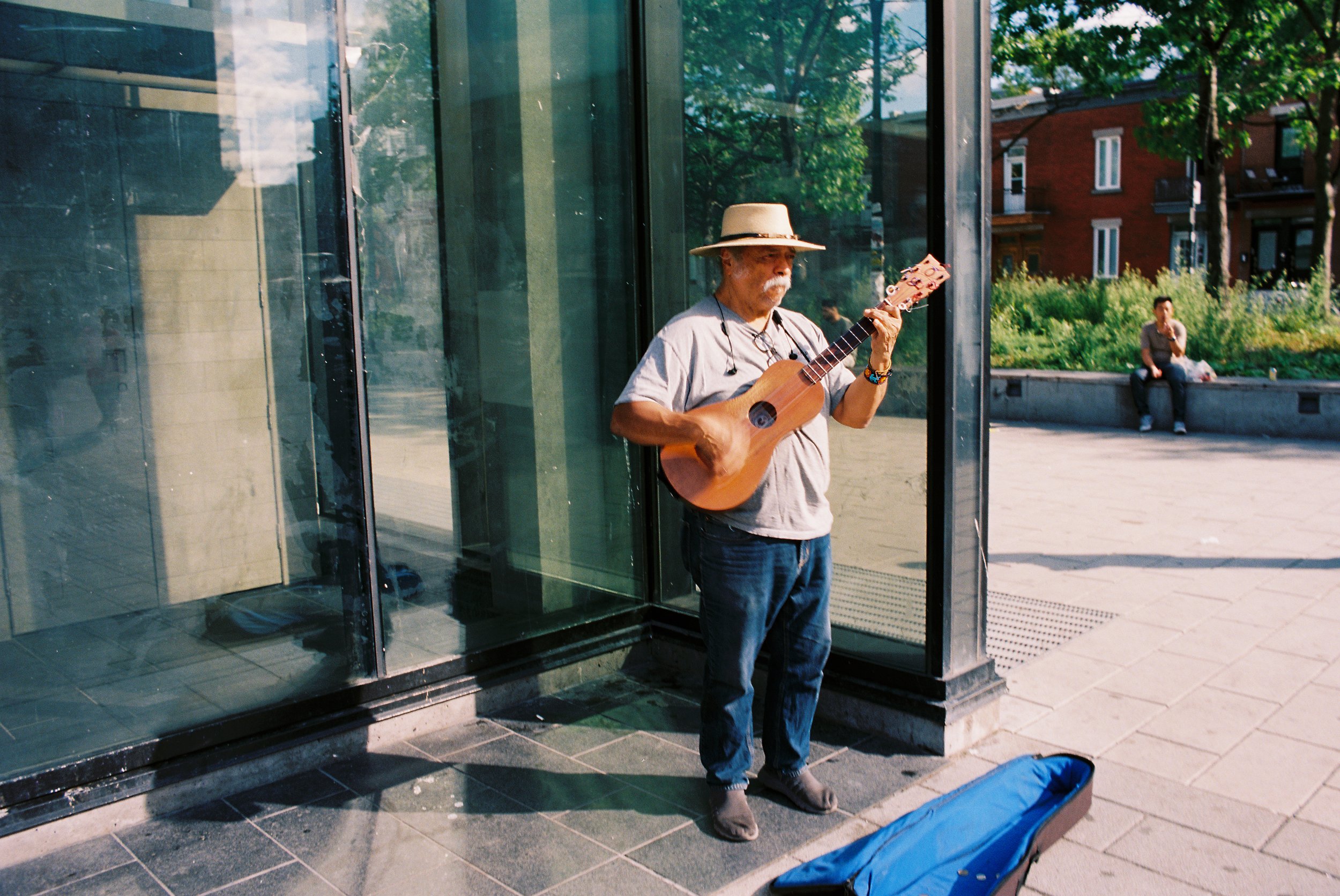
We called an Uber to get from the airport to our Airbnb. When our Uber driver, Mourad, arrived, he had an instrument in his front seat. The instrument – whose name I can’t recall – was something akin to a guitar. Mourad, who is from Algeria, was gregarious and excited to talk about music when he learned that we were in Montréal for the jazz festival. As it turns out, he was a musician himself and, during an early part of his life, was in a band in Algeria. Maroud played some of his music that he’d recorded with his band during our ride. One song in particular sounded close to The Eagles’ Hotel California, which he acknowledged and laughed about. The lyrics to the songs were in Arabic, but, sonically, the song sounded akin to what might be considered rock.
During another Uber ride, this time after leaving the festival, a few of us were in a car with a driver named Livens. Livens didn’t speak much, but he played his music, mostly Kompa – a style of music indigenous to Haiti but melds music from the broader French West Indes, West Africa, Europe and Latin America. Some of Kompas’ more contemporary artists blend influences from Hip-Hop, Gospel, R&B, and the broader landscape of Black diasporic musics. During our ride, Livens played a song called Move Your Hips by js mizik, a Haitian guitarist, composer, and arranger (which I immediately Shazam’d after it came on). The song features in-your-face synthesizers, a propulsive drumbeat, a guitar (with what sounds like some type of rotor effect on it), and a driving bass line. It’s the type of song that both felt familiar to me but also totally new.
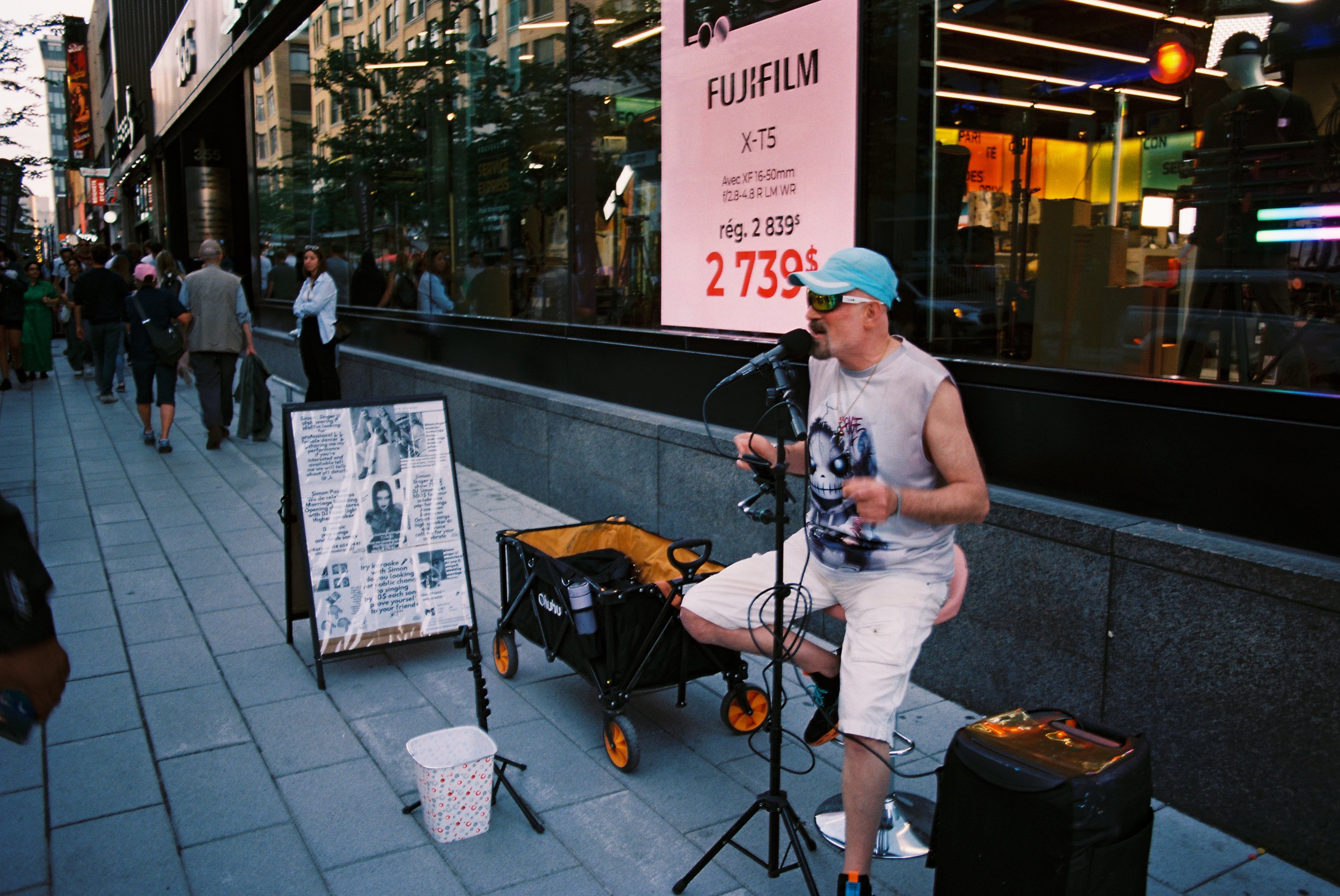

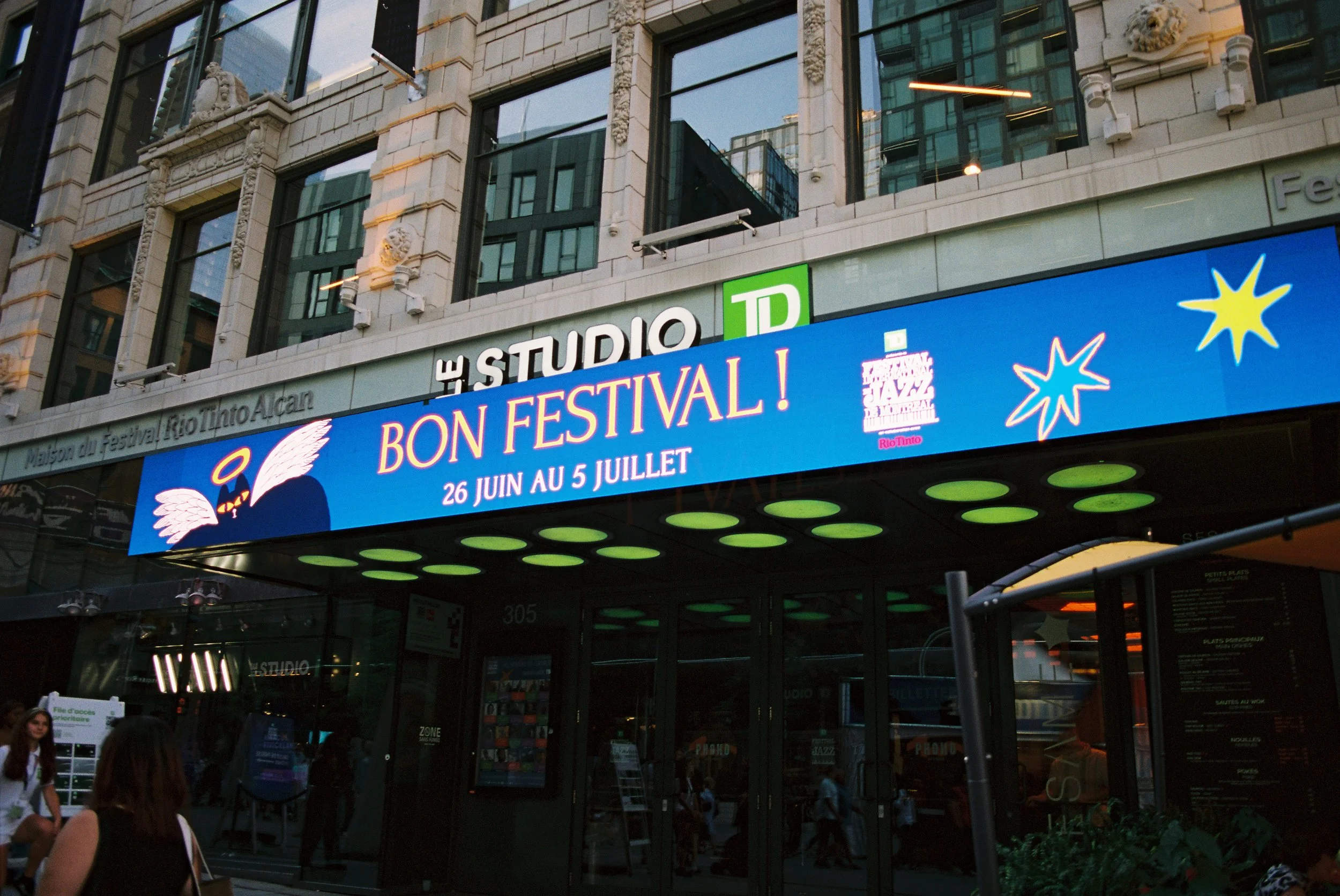
On the first night of the festival, we made our way to Le Studio TD – a small, indoor music venue along the Place des Arts strip – to see Julius Rodriguez, the pianist, producer, and bandleader. Toward the end of his set, he asked the audience, “are there any Haitians in the room?” There was a faint reply, to which he replied, “like 2 people, and me.” He proceeded to play his original song, Gift of the Moon, from his 2022 debut album, Let Sound Tell All, but with a twist: a new, Kompa-inspired arrangement. I was a fan of the song before, but the Kompa version is now forever etched in my memory. The groove felt good, inescapable, propulsive. It’s the one moment I’ve thought about seemingly persistently since leaving the festival.
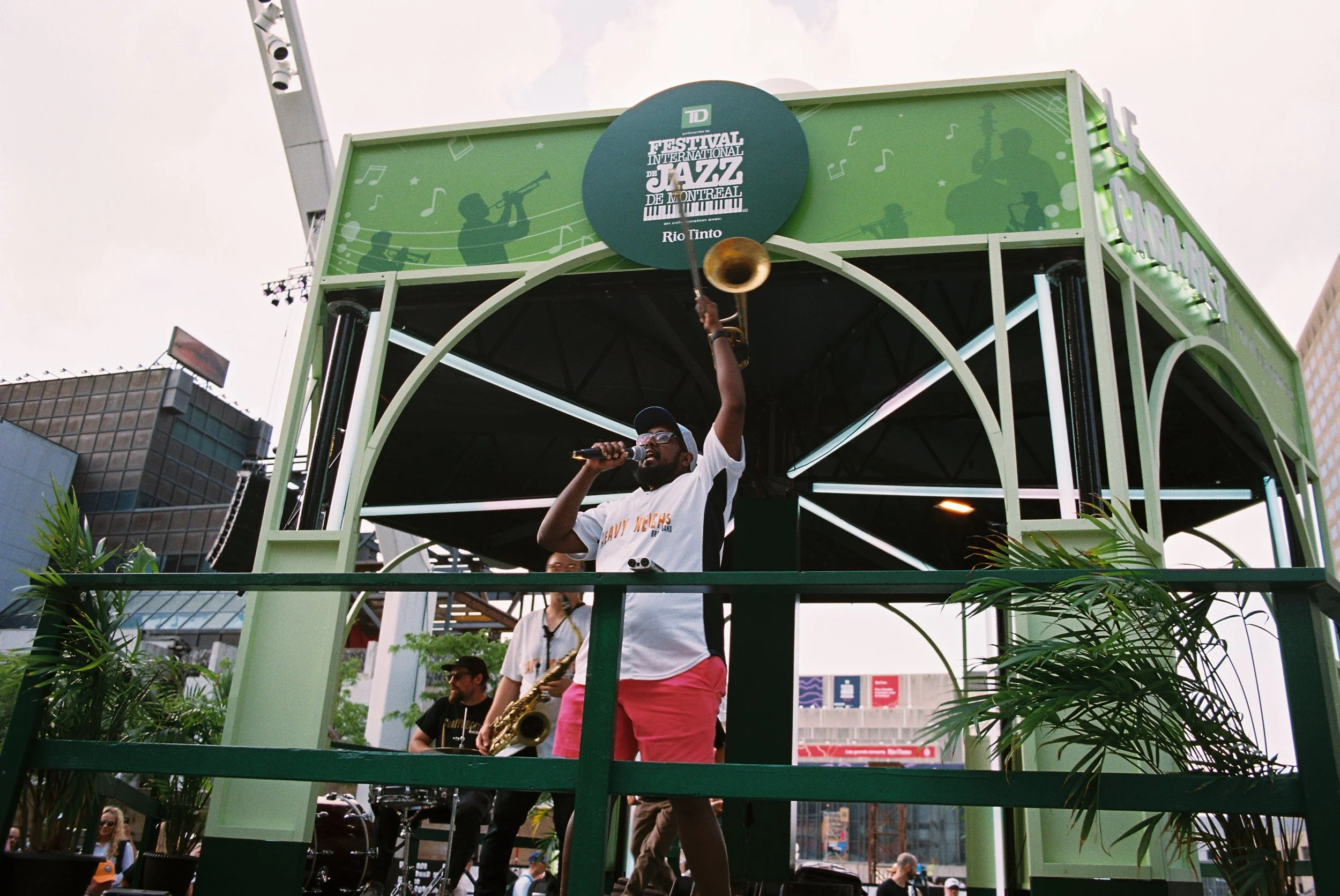
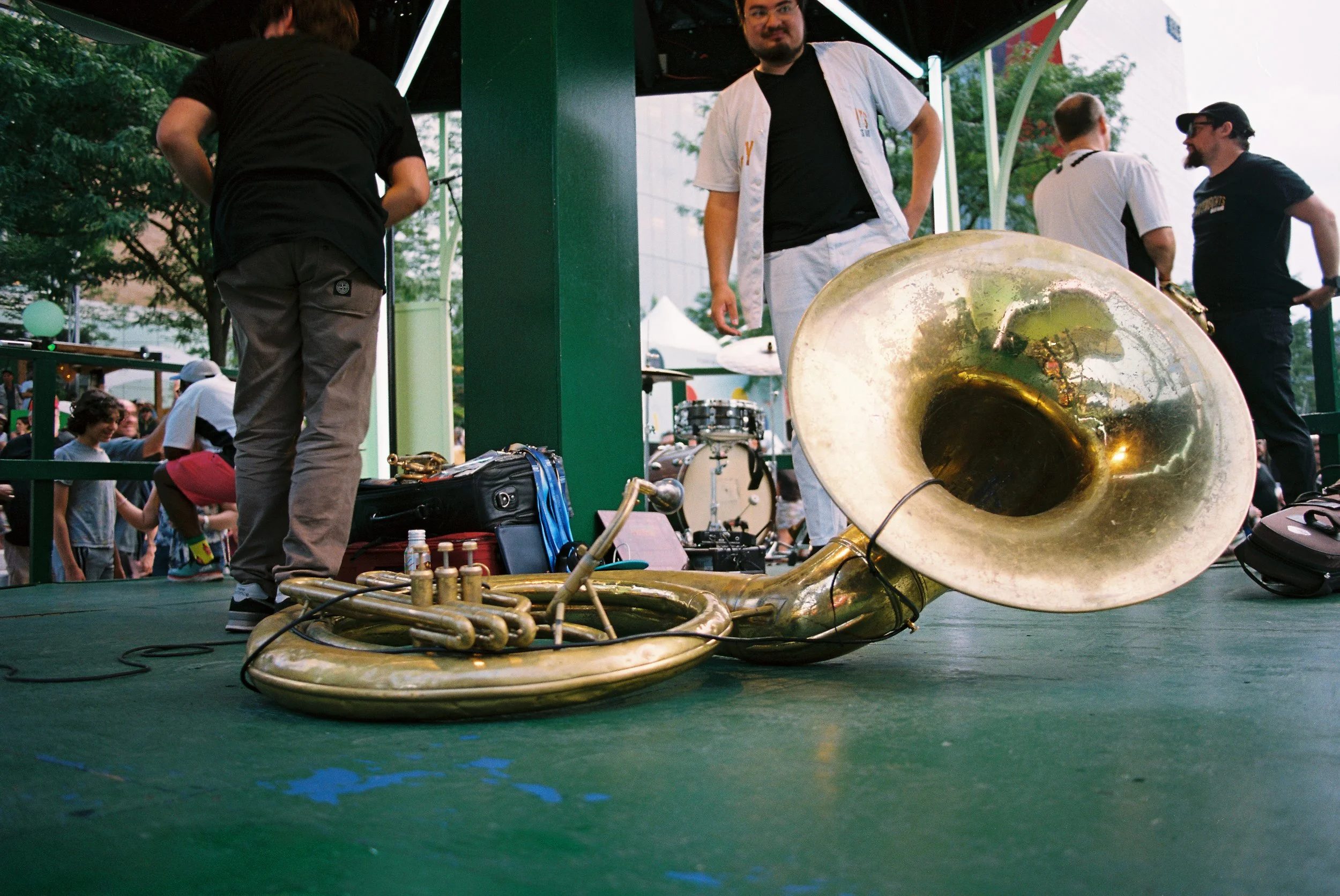
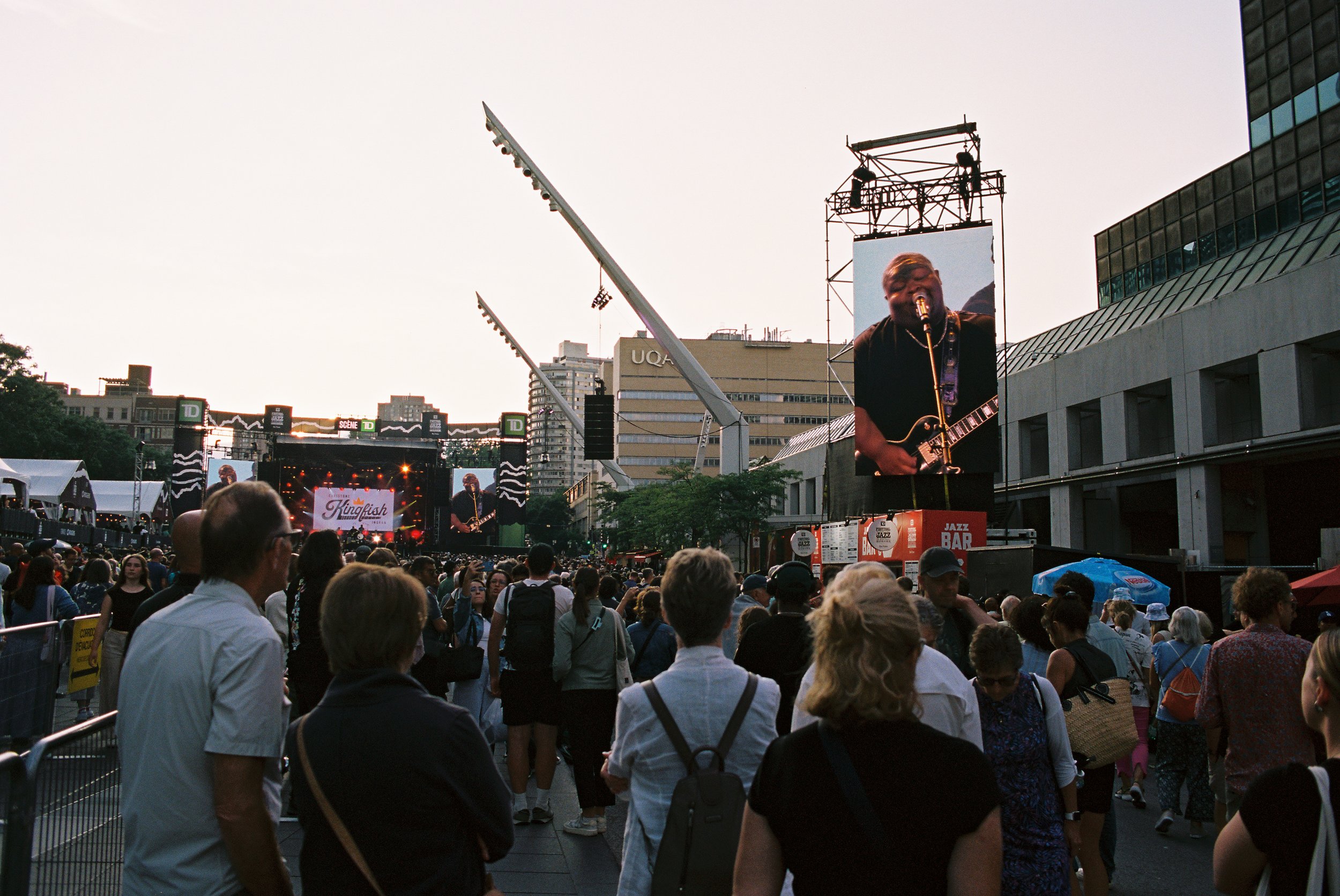
On July 4, while walking through Place des Arts, we stumbled upon Rara Soley, a Montréal -based, traditional Haitian group playing at Le Cabaret, a gazebo, outdoor space at the festival. I say, “stumbled across” because Le Cabaret is sort of positioned near the festival’s main stage. There’s little fanfare for this area: there’s no announcer introducing the band, minimal backline, or screen for you to see if you happen to be too far away. It’s the sort of space where the festival’s curators have conceded that, if you want to watch, you can. But, walking by Le Cabaret on this night, the energy was pouring out of the gazebo. People were dancing, circling the gazebo in a line; the drums were vibrant, there was singing. The band’s emphasis on traditional Haitian music – opposed to something more contemporary, like Kompa – meant that there were Haitian drums (the tanbou), vaccines (“vaskin” – a horn-like instrument), and graters. The rhythms made the connection to Africa undeniable. For the days I was at the festival, this was the most vibrant I’d seen it.
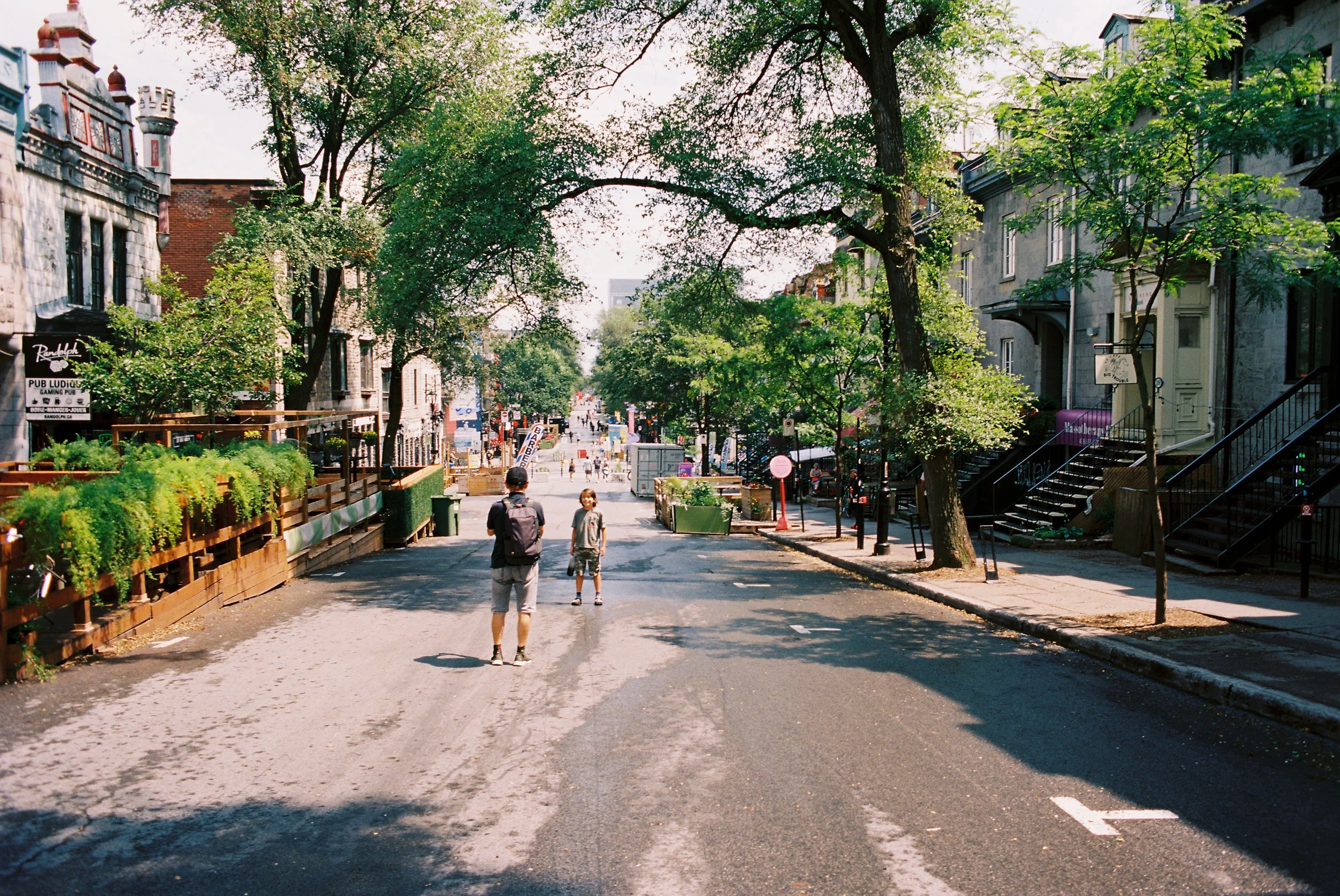
These moments, while they may seem disparate, are emblematic of the relationship between place and sound, offering insight into the sound of Montréal. Our Uber drivers – from Algeria and Haiti, respectively – exist in the aftermath of Francophone colonization, as does the city of Montréal. Still, there is a sound that emanates from the city that combines cultures – from the Arab world to Latin America and the Caribbean. Julius Rodriguez may have made a Kompa arrangement for Gift of the Moon previously, but I’m sure there was extra motivation to perform it in Montréal.
The City of Festivals
In addition to garnering the title of “the world’s biggest jazz festival,” Montréal has earned itself the moniker of “Festival City” (or “City of Festivals”), a nod to the number of festivals the city hosts from May – September.
From my experience as a festivalgoer, the festival ran smoothly, the acts were on stage (and critically, off stage) on time.
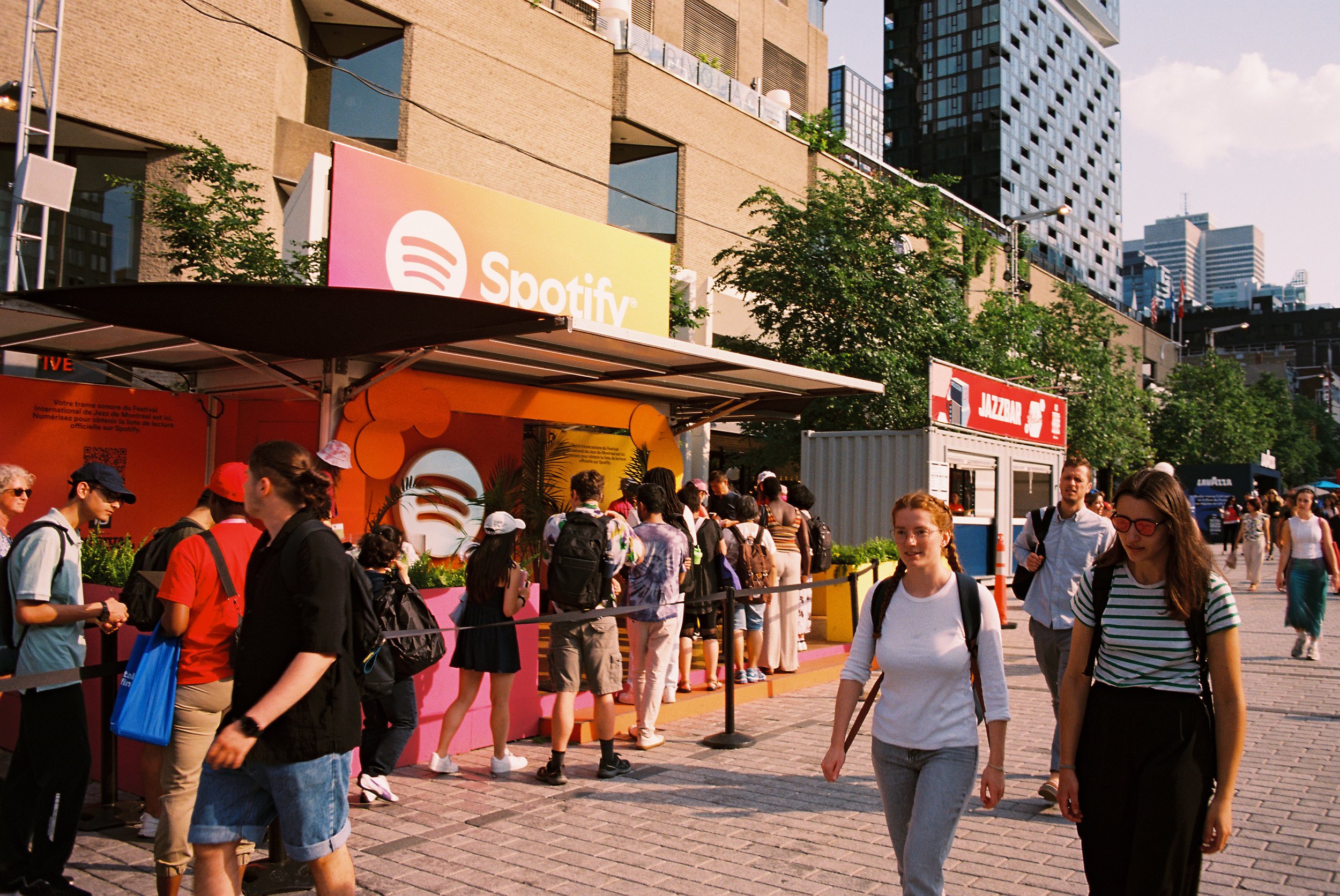
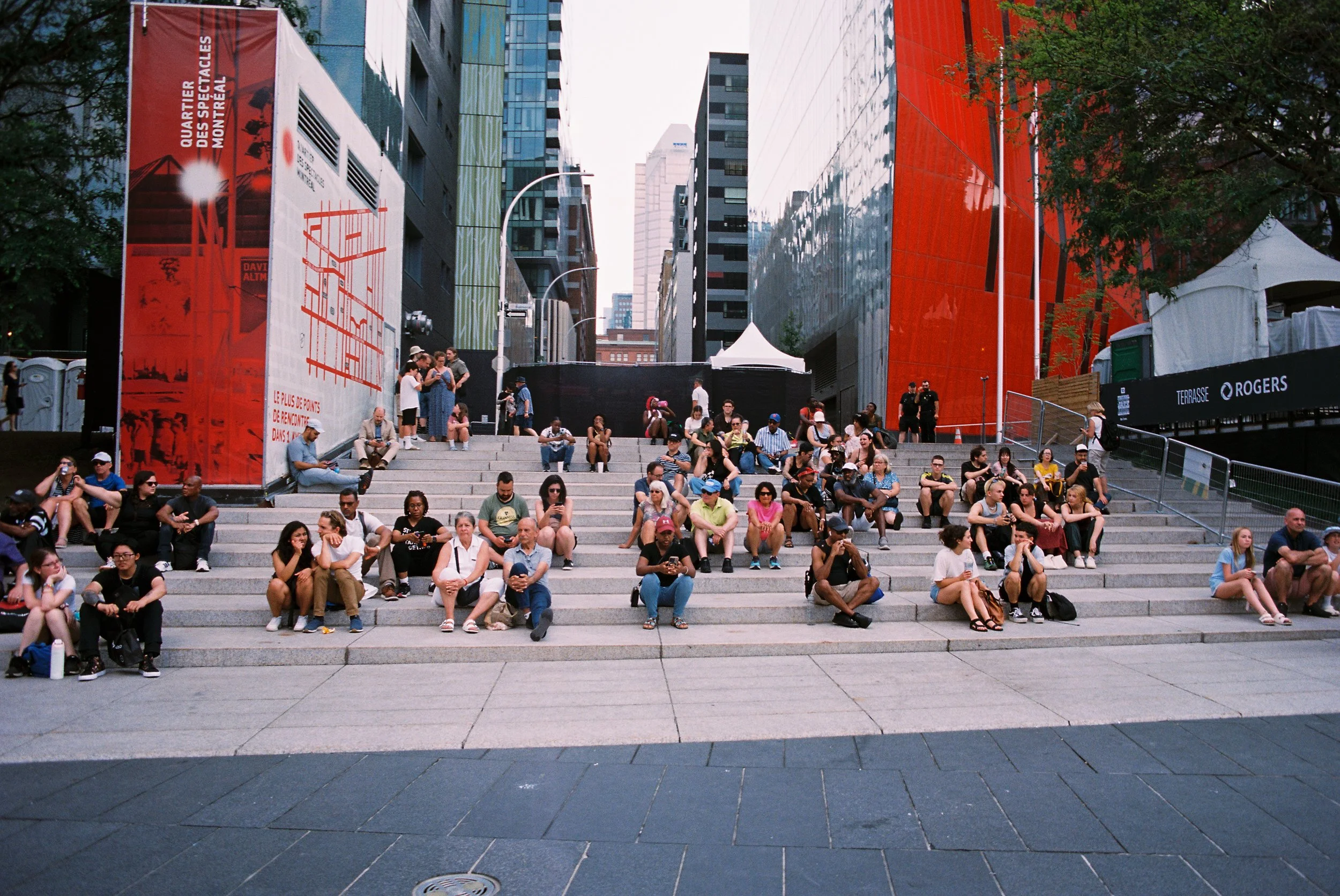
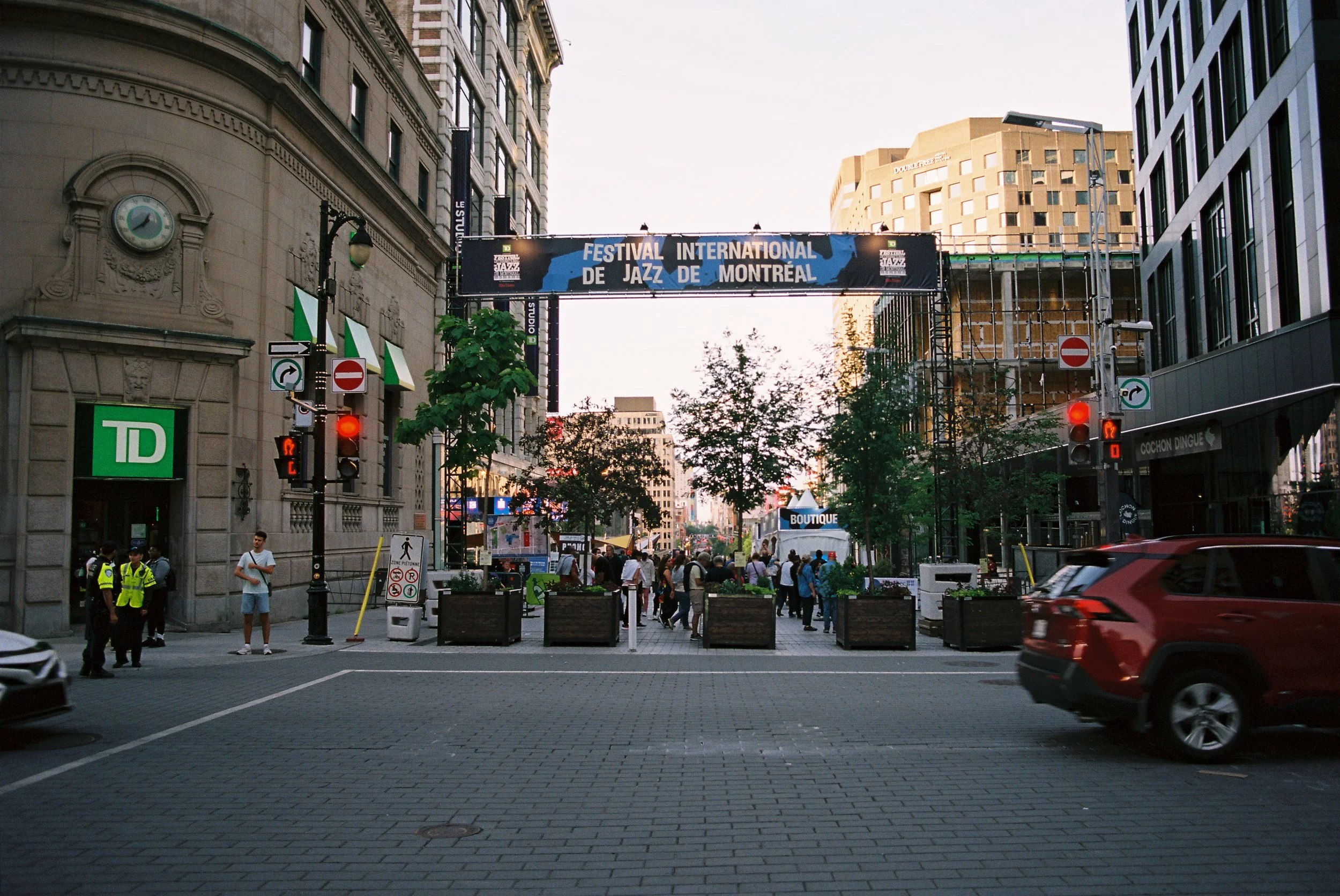
While much of the festival was held at Place des Arts, which had two, large outdoor stages, as well as several indoor venues, the festival also utilizes several venues throughout the city. Jonathan Wynn, a sociologist at the University of Massachusetts – Amherst – calls this type of festival setup a “confetti pattern” where events are sprinkled across a wide area, bringing together a wide range of actors, organizations, and experiences. There were barricades around the festival area, but there weren’t any metal detectors or security checks to enter the ground. This was unusual to me, a bit jarring, even. Many of my experiences at American festivals are routinely marked by long lines that are slowed even further by security procedures (more on this later).
Equally surprising was that all of the shows were free.
All of this for free? Who’s paying for it?
After leaving the Derrick Hodge conversation, we made our way to the main stage. It was about 6 PM, so the sun was setting, which meant we were looking directly into the sun, given the stage’s position. It’s an early-July day, too, so it was pretty hot. My friend Kevin – who is now on Instagram (for now) – went looking for some water. When he came back to the group, he had a bewildered look on his face. I thought something bad happened, but it was hard to gauge. We asked him: “you good? Everything ok?” He responded, “The water is free. I tried to pay for it, and they gave it to me for free.” Nothing says shock more than getting free water when you need it.
According to Maurin Auxéméry, Director of Programming for the festival, roughly two thirds of the shows are free of charge. This arrangement is intentional. In its early days, what set Montréal apart from other festivals, particularly the Newport Jazz Festival (Newport, Rhode Island) and the Montreux Jazz Festival (Switzerland), is that they did not charge for admission.
Still, there is a question – a question I asked myself before the festival, and after: who is footing the bill for this stuff?
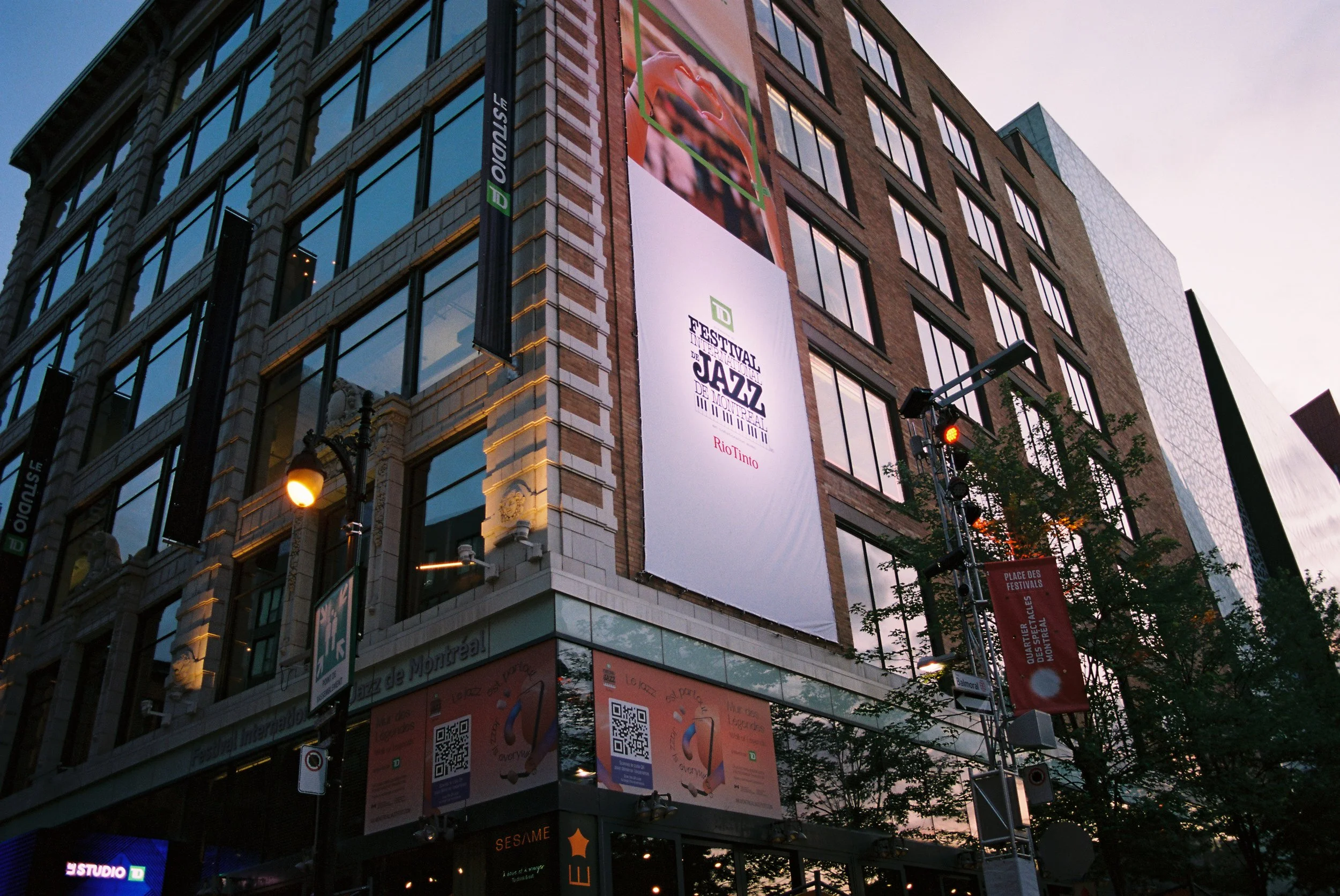
The Montréal International Jazz Festival is one of a handful of jazz festivals held in cities across Canada. Vancouver, Winnipeg, Halifax, Victoria, Saskatchewan and Toronto all do their own versions of what Montréal does. Each of these festivals are sponsored by Toronto-Dominion (TD) Bank along with a few other sponsors (TD Bank has been the title sponsor of the Montréal International Jazz Festival since 2009). For the sponsors there is great benefit (immediate and in the long run) in being associated with the festival. It’s the type thing “brands” clamor for, using the festival’s reputation and attendance numbers to increase their brand awareness.
There’s also the Government of Canada, which contributed about $700,000 to the festival. According to a press release from the Canadian government, the goal is that the festival will “offer fans a talented lineup and welcome a diverse range of artists.” In 2015, it was reported that the festival brought in about $100 million in profits for the city. While more recent data is hard to find, I can’t imagine the festival bringing in less money, considering its expansion in recent years. Walking around Montréal during the festival, it’s not hard to imagine the financial benefits to nearby restaurants, hotels, Airbnbs, bars, and retailers writ large.
I felt a similar shock as Kevin did – when he got free water – throughout the festival.
In 2022, Kevin and I wrote about our experience at the Roots Picnic – the annual music festival sponsored by Live Nation Entertainment. We wrote about how entry/security lines were long; how nearly all the slated performance times were late; how the sound was bad, and so on. And If I thought 2022 was bad, and things couldn’t get worse, boy, that had nothing on what transpired this past year at The Roots Picnic. For us, the biggest takeaway from The Roots Picnic fiasco was how the never-ceasing quest for growth (economic, number of stages, performers, vendors, and so on) hurt the festival experience. All of which is compounded by the festival cutting corners on cost. It was, and is, a mess.
The Roots Picnic is not an outlier. There have been similar complaints at small(er) festivals, like Broccoli City Festival, as well as large festivals, like Coachella. Greg Rosalsky, writing in NPR, declared 2024 the year that music festivals died. This was an assertion made because of deceasing attendance numbers at festivals across Europe and America. But, I would argue, this is something unique to the way festivals are done in America.
I do not believe Montréal or Canada’s respective governments to be altruistic in their support of the festival. The same goes for TD Bank or Rio Tinto – the two presenting sponsors for the festival. I don't think it too much to say they are motivated by profit. Still, what I experienced in Montréal was unique turn from what I have experienced, and read about, at many American music festivals. I did not see riot and tactical gear at the gates waiting for me and the long lines they produce. This relationship — between policing, music festivals, and perceptions of safety/trust — has been taken up by scholars studying policing at music festivals, finding that increased surveillance often incites feelings of anxiety for festivalgoers. What I did see were people moving with ease, enjoying music. I saw families and young children. There was, to my eye, a sense of community. Musically, I saw artists I’ve long wanted to see at no cost (to me). I saw engaged crowds and listeners. There was an intentionality that came through. It seems the Montréal Jazz Festival has maintained the spirit its founders sought to achieve, and represents what music as a good for the public can be.